Google admitted it: you can now measure your visibility in AI answers
Search Console added a dedicated generative AI report — AI Overviews, AI Mode and Discover. What it shows, what it hides, and how to use it without fooling yourself.
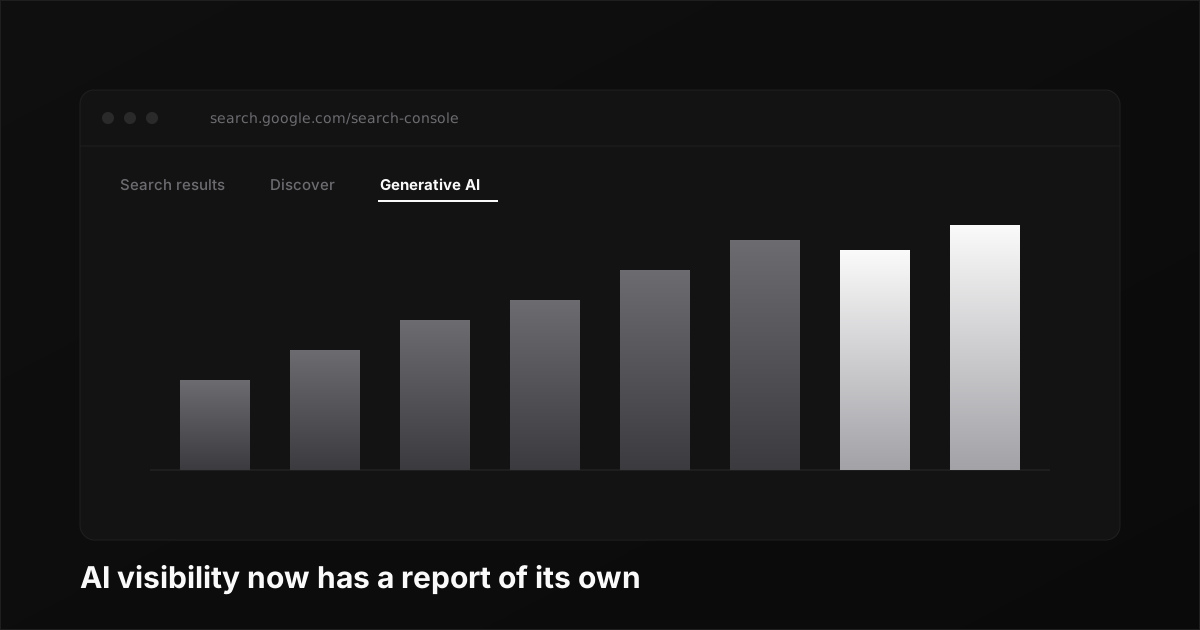
On June 3, 2026, Google launched a dedicated generative AI visibility report inside Search Console. For the first time, you can separate how often your site appeared in AI Overviews, AI Mode, and the AI features in Discover — instead of seeing it all blended into one impressions number.
It’s a quiet milestone. For two years the industry asked the same question — “am I showing up in AI or not?” Google just admitted, in practice, that the question deserves a dashboard of its own.
What the report shows
The new view lives under Performance → Search results, in a Generative AI tab next to “Search results” and “Discover.” It reports impressions — how often URLs from your site appeared in generative AI features across Search and Discover — broken down by four dimensions:
- Pages — which URLs show up in the answers.
- Countries — where the impression happened.
- Dates — how it moves over time.
- Devices — desktop, mobile, or tablet.
This data is also folded into the overall performance report, so it complements — not replaces — the view you already track.
What it does not show
This is where enthusiasm needs a brake. Three limits matter:
- No position, no competitive context. You see that you appeared, not why, and not who appeared alongside you. There is no “ranking” inside an AI answer.
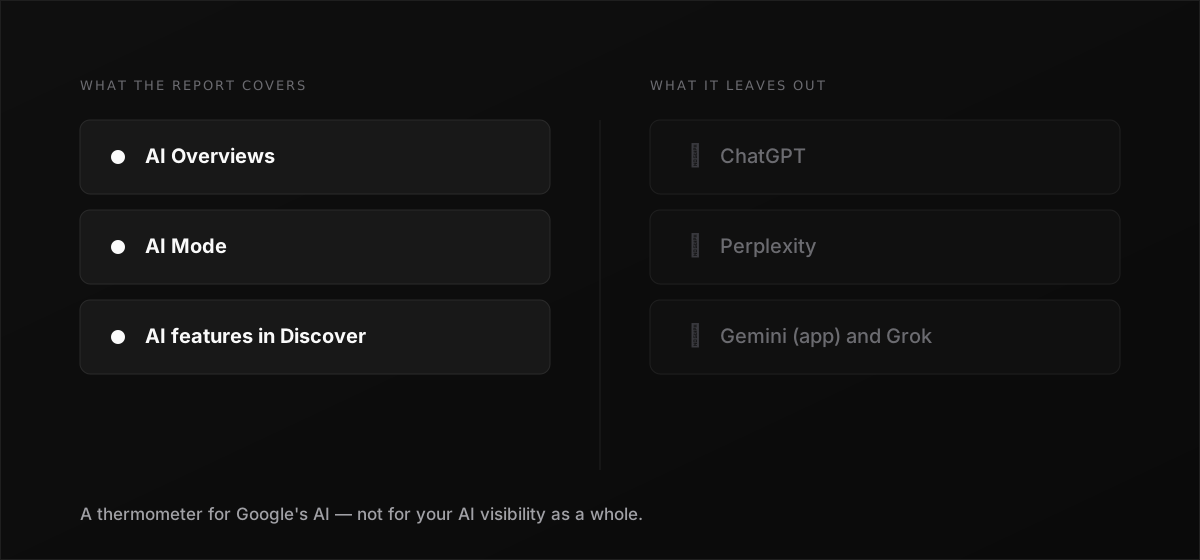
- Google’s AI only. The report covers AI Overviews, AI Mode, and Discover. It does not cover ChatGPT, Perplexity, the Gemini app, or Grok — which is where a large share of your mentions actually happen.
- Gradual rollout. It’s shipping to a subset of sites, starting in the U.K., with a global rollout to follow. If the tab hasn’t appeared for you yet, that’s expected.
How to use it without fooling yourself
Treat the report as a free thermometer of your visibility in Google’s AI — not as the full scoreboard for your GEO. Three honest uses:
- Baseline. Record today’s AI impressions number. It’s your starting point for measuring the effect of any content change.
- Which pages AI picks. Cross the Pages tab with what you publish. The URLs that surface in answers reveal what kind of structure the model finds quotable — and that lesson carries to any engine, not just Google.
- Recency signal. Watch the date curve after you refresh content. Retrieval-grounded models reward fresh material; the report gives you a proxy for that.
What it won’t solve on its own is the question that matters for a B2B brand: how do I show up across all the AI engines? For that you still need to measure ChatGPT, Perplexity, and Gemini outside of Google. That exact gap is what led us to build First Answer.
What comes next
The piece that would really change the game hasn’t landed yet: API access. The day this data leaves the dashboard and can be cross-referenced with your other metrics — revenue, mentions outside Google, conversions — the quality of the insight jumps a level. For now, it’s a good thermometer. And a thermometer beats guessing.
Source: Introducing Search Generative AI performance reports in Search Console — Google Search Central Blog, June 3, 2026.